Lakme K. Marak, from Resu Dekachang, North Garo Hills, Meghalaya, began her journey in traditional weaving with a simple vision: to transform her weaving skills into a sustainable livelihood. Starting with just one loom, she gradually developed her skills and established Lakme Weaving Centre, driven by her passion for preserving Garo traditional textiles and promoting indigenous craftsmanship.
From One Loom to Empowering 30 Workers Through Traditional Weaving
Lakme K. Marak, from Resu Dekachang, North Garo Hills, Meghalaya, began her journey in traditional weaving with a simple vision: to transform her weaving skills into a sustainable livelihood. Starting with just one loom, she gradually developed her skills and established Lakme Weaving Centre, driven by her passion for preserving Garo traditional textiles and promoting indigenous craftsmanship.
Lakme wanted to develop her weaving activities into a growing enterprise while creating employment opportunities for people in her community. In 2024, she established the Rike Doke Chuangchina Handloom Weavers Cooperative Society Ltd. to strengthen her work, bring weavers together, and support skill development and livelihood opportunities through traditional weaving.
One of Lakme’s biggest challenges was the lack of a proper workspace. Without a suitable work shed, she often had to stop weaving during the rainy season. These interruptions affected her productivity and made it difficult to manage her work consistently. Traditional weaving was also time-consuming, limiting the number of garments she could produce within a given period.
Despite these challenges, Lakme remained determined to grow her weaving enterprise. She continued developing her skills, improving her production methods, and working towards creating more opportunities for local people. She also explored ways to make weaving more efficient without losing the cultural identity and traditional value of Garo textiles.
A key part of her progress was adopting the Jacquard loom weaving mechanism. Traditionally, weaving a single Dakmanda on a conventional loom could take approximately two to three weeks. With the Jacquard loom, the production time has been reduced to around two and a half days, significantly improving efficiency.
In 2024, Lakme received financial assistance through the CM-ELEVATE Scheme, including a loan of ₹5 lakh and a subsidy of ₹19 lakh. This support enabled her to construct a proper work shed and a storage room for her looms, helping her overcome one of the major challenges in her business.
Access to improved weaving technology also played an important role in strengthening her production capacity and creating opportunities for business growth.
With improved infrastructure and the adoption of the Jacquard loom, Lakme was able to improve her working conditions and increase her production efficiency.
Her unique approach includes using locally available silk yarns, such as Muga, Mulberry silk, and Eri silk, to create traditional garments. By combining indigenous materials with improved weaving technology, she has been able to produce Dakmandas more quickly while maintaining the cultural significance of Garo textiles.
Her increased productivity has strengthened her business and earning potential. The information provided indicates that she now earns an estimated net profit of ₹1–2 lakh, although the period covered by this figure needs confirmation.
Today, Lakme Weaving Centre has grown significantly from its humble beginning with one loom. She now provides employment to approximately 30 people, including weavers and workers involved in yarn preparation.
Her work has also gained recognition beyond her local community. She has showcased her products on national and international platforms, including a fashion event in Delhi, a traditional silk yarn exhibition in France, and the World Expo in Japan.
She is also reported to have received the Best Handloom Designer Award at the International Delhi Fashion Award (IDFA) 2025.
Through her enterprise, Lakme is helping preserve Garo textile traditions, promote indigenous silk yarns, and create employment opportunities while bringing local craftsmanship to a wider audience.
Lakme plans to expand her weaving business beyond traditional Garo attire. She aims to design and weave other Indian garments, including kurtas, sarees, and shirts for men, using locally available materials wherever suitable.
Her vision is to blend traditional weaving techniques with contemporary designs to create unique, high-quality garments that appeal to a broader market.
With improved infrastructure, modern weaving technology, and an established workforce, Lakme hopes to expand her business, promote indigenous materials, preserve traditional craftsmanship, and create more livelihood opportunities for people in her community.
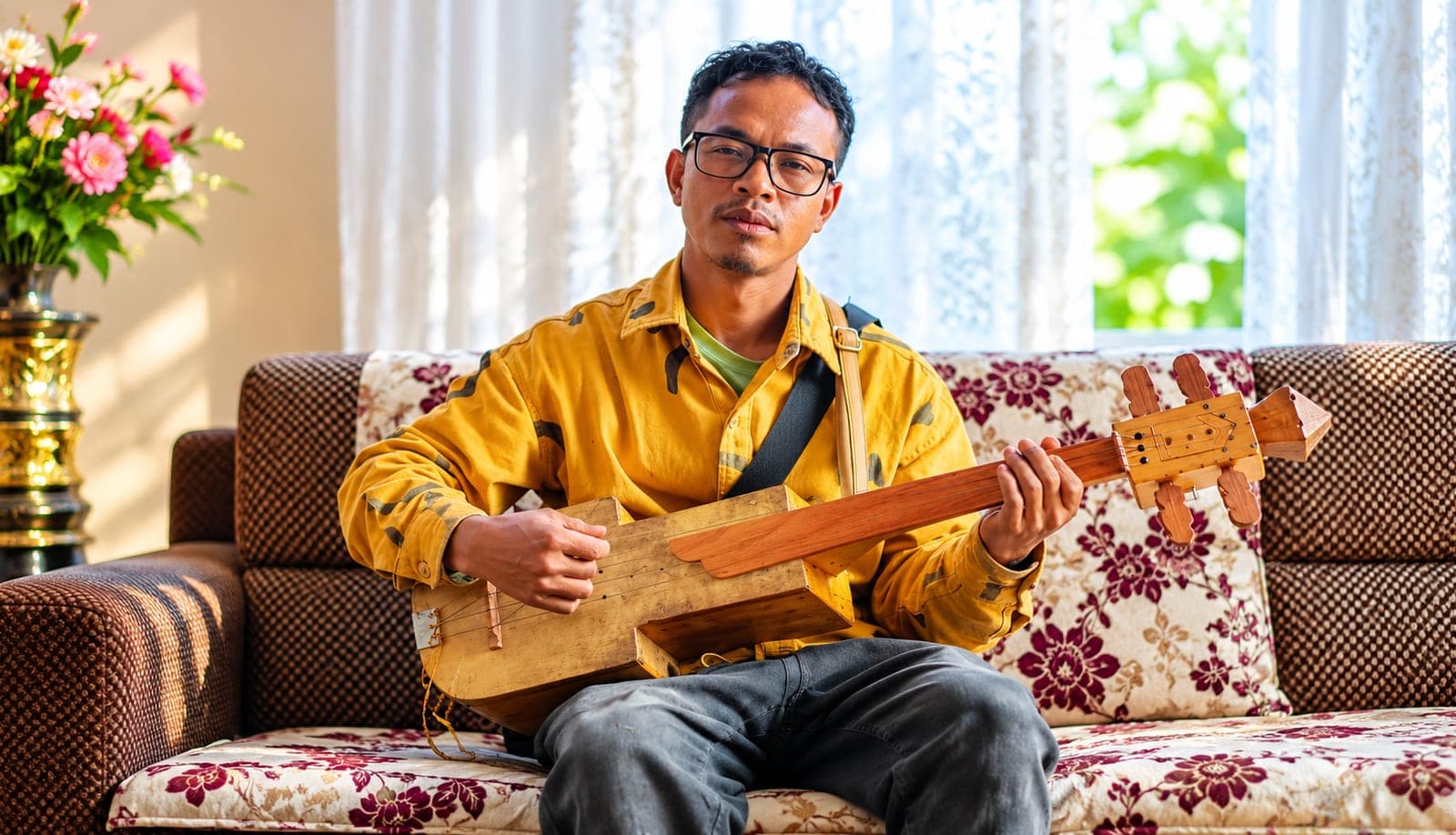
Unable to afford the Khasi instruments he longed to play, Noristar Nongpluh of Jongksha began making them himself. Today his handcrafted duitara, ksing, bom and more earn him a livelihood — and the title of PRIME Meghalaya's Entrepreneur of the Month for August 2026.